Covid-19. What Comes Next? Why the Pandemic Will Usher in a New World.

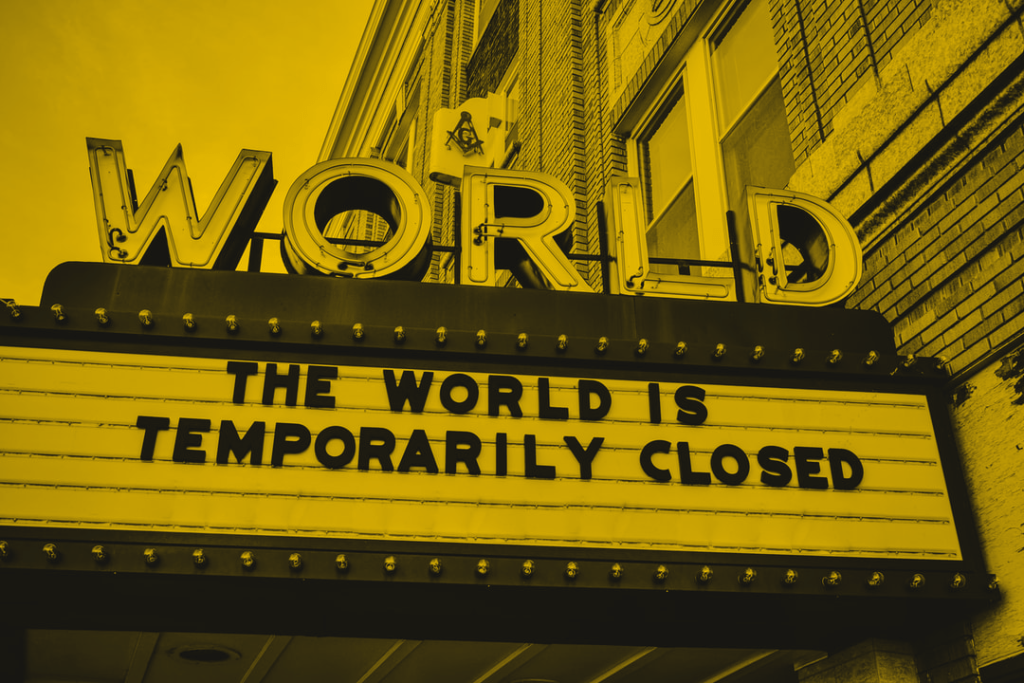
Back in theearly 2000s, just as the internet was gaining traction, the world’s foremostfuturists were talking of a ‘new economy’; a ‘structural shift’ that would changethe way we live forever.
It was a statementthat all but the most forward looking and technically minded individuals poopooed.But as Covid-19 wreaks havoc around the globe have we once again reached the precipiceof another societal-defining moment?
Seismic as theinitial health response (and subsequent ‘lockdown’) has been, the economic impactwill be of a magnitude much greater and not simply because it will cause a deeprecession. The pandemic will cut swathes through many of the industries we takefor granted, and many businesses within them will never return.
Suddenly a business' cash position is critical after years of running on debt and fumes and as Warren Buffet so eloquently once put it:
"when the tide goes out you see how many were swimming naked."
The end of the20th century economy?
For those that survive thoughts will soon switch to how to better protect themselves, and their employees, from future outbreaks reducing reliance on human workforces and global supply chains.
Yes, there will be a financial crisis but, longer term, we will look back and see that Covid ushered in a new era that kickstarted the end of the 20th century economy as we know it.
Such changes are critical to how a start-up investment fund like ours functions of course and we have spent the last two weeks beginning to build out our view of how this could shape our own investment thinking.
As a backer ofdigital disruptors and pioneers we are in the somewhat privileged position ofseeing what some of the most forward-thinking entrepreneurs on the planet areworking on and how they see it changing how we work and live.
So, whatchanges?
The biggestthing we will see from the shift is an acceleration of the inevitable. Beforeall this we knew that robots would be important. We knew that the High Street,as we know it at least, was dying. We could see how virtual reality, onlinegaming and video would change the way we worked and spent our leisure time.
In manyrespects the growth in all of the above will come as no surprise, but it willfast become a priority of those that run businesses to install autonomy whereverpossible to find ways to mitigating further outbreaks and even look toenhancing health cover as a critical employee benefit to attract the best workers.
Covid 19 willalso sweep away many of the artificialbarriers to moving more of our lives online. Not everything can become virtual,of course. But in many areas of our lives, uptake on genuinely useful onlinetools has been slowed by powerful legacy players and bureaucracy. Both theformer and latter will evaporate away as barriers and red tape fall, creating agold rush for anything that digitises our lives.
And that will cut acrosseverything from how we educate our children to how we socialise and interactwith one another. In a world where there is a sudden awareness that touchingand coming into close contact with anything or anyone carries inherent risk willwill switch from asking, “Is there a reason to do this online?” to, “Is thereany good reason to do this in person?
Home schooling and remoteworking
Home schooling will also becomemore prevalent in parallel with the obvious changes in remote working that willfollow. Parents are realising they can work more effectively whist helpingtheir children grow at the same time; a powerful combination of factors thatwill produce an explosion in tools and platforms to make that more effectiveand efficient than ever.
Virtual and augmentedreality will also come to the fore much faster than expected as a result of thechanges discussed above. Less face-face interaction will mean we strive to makedigital interaction more tangible, while it provides solutions for those havingto self-isolate or withdraw from societal risk.
And with more ‘home’time more and more will look to streaming; whether that be anything fromconsuming TV programmes or movies to gaming and beyond. Even sports will followthis route as we develop ways to make video more interactive and lifelike.
Supply chainsand de-globalisation
And then thereis the global economy; until now so interconnected and focused on just-in-timedelivery and efficiencies that no one stopped to think about. How do we react?Should we look to become closer or further apart?
Whateverhappens no country or industry will be blind to the risks that globalisationpresents and that will drive behaviours towards greater production of good andfood domestically, creating an expansion of UK manufacturing and agriculture,after so many decades in the doldrums but with a new focus on how technologycan help. Buying British will never have had such kudos!
There will beoodles of opportunity for those thinking about how they can provide keyproducts to businesses small and large that have, until now, relied on othercountries to provide them. While costs may increase, some will see the tradeoff as both necessary and worthwhile.
Touchlessenvironment
And what then happensto our view of the physical environment once we are allowed out again? If, likeme, you’re already suddenly aware of touching handles, letter boxes andpackages how will you feel when we go back to ‘normality’? Start-ups andcompanies building out the future of hand-free hardware and tech will prosperlike never before. After all, why would you want to touch a lift button or doorhandle when you can gesture to open or operate it?
And the samegoes for cash. In the same way we saw this coming for the High Street and otherareas of the world within which we live the same will undoubtedly be true ofcash; its use already in serious decline. Money that was already pouring into contactlesspayments and so this will only increase to make this theory reality.
But, really…?
And if you are wondering is any of these predictions have legs thenconsider this simple data point; one of the few already available that gives usany kind of feel for how rapid this acceleration could be:
“In just the last five months online ad spend has increased to what it was projected to be in 2023 because so many more people are spending so much more time online.”
This is a huge break with the past.
Pandemics throughout history have always left a legacy. This is Covid 19’s and it will shape how we live and work, forever.
-----------------------------------------------------------------------------------------------------------------------------------------------------------------------------------------------------
For more on how best to navigate the current crisis please take a look at our tips for managing the day-to-day challenges that Covid-19 brings.

The latest
from Haatch
Haatch exits Trigify to HubSpot at up to 3.53x
We are delighted to announce the successful exit of our full position in Trigify following its acquisition by HubSpot, the agentic customer platform for scaling businesses. The all-cash transaction delivered up to 3.53x for our investors. This exit represents Haatch’s 6th profitable exit in the last 18 months.
British Business Bank backing for Haatch reaches £62 million
A further £10 million commitment takes investment in Haatch's pre-seed and seed funds to £30 million, sitting alongside the £32 million angel syndicate platform Haatch manages on the Bank's behalf making Haatch the largest of all programme partners.